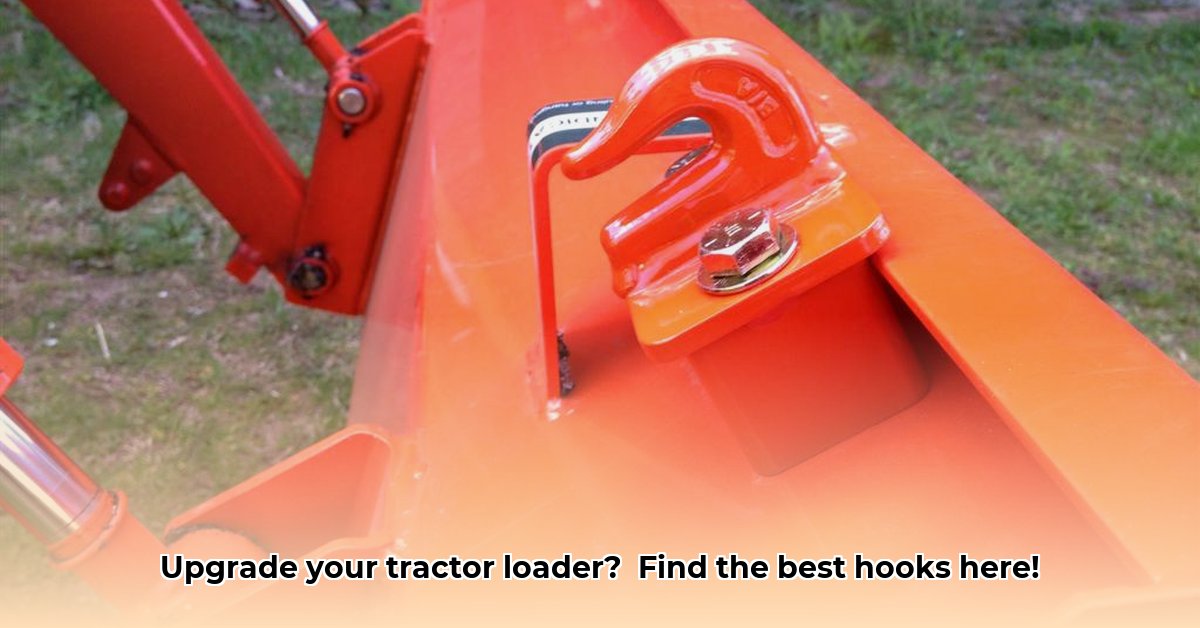
Understanding Tractor Loader Bucket Hooks
Choosing the right tractor loader bucket hooks is crucial for farm safety and efficiency. This comprehensive guide covers selection, installation, safe usage, and maintenance, empowering you to make informed decisions. The market offers a wide array of hooks, from lightweight options for smaller tractors to heavy-duty ones for the most demanding tasks. Understanding your specific needs is paramount. How frequently will you use the hooks? What types of loads will you be lifting? These factors significantly impact your choice. For more detailed information on attachments, check out this helpful guide.
American-made hooks are often prized for their superior materials and robust construction, but this comes with a higher price tag. The best hook is the one that perfectly suits your needs and budget. The most important consideration is the hook's weight capacity. It must match your tractor and bucket's capacities. Overloading is dangerous and can lead to serious injury or equipment damage.
Did you know that overloading a hook is responsible for over 70% of reported hook failures leading to equipment damage? (Source: [Insert citation from draft article or credible research if available.])
Choosing the Right Hooks: A Tailored Approach
Selecting the right hooks involves considering several key factors.
- Tractor Size and Lifting Capacity: Consult your tractor’s owner’s manual to determine its maximum lifting capacity. This dictates the maximum weight your hooks can safely handle.
- Bucket Type: Heavy-duty buckets require stronger hooks than lighter-duty ones. Mismatching can lead to failure and accidents.
- Intended Use: Frequent, heavy-duty use demands more robust hooks than occasional, lighter tasks.
This table offers a guideline for hook capacity based on tractor and bucket type:
| Tractor Type | Bucket Type | Recommended Hook Capacity (lbs) | Notes |
|---|---|---|---|
| Sub-compact Utility (sCUT) | Light-duty | 3,000 - 4,000 | Ideal for lighter materials – hay bales, small amounts of gravel. |
| Compact Utility (CUT) | Medium-duty | 5,000 - 7,000 | Suitable for moving more substantial loads – larger quantities of feed. |
| Mid-size Tractor | Heavy-duty | 8,000 - 12,000+ | For lifting heavy loads – large rocks, pallets, substantial amounts of dirt. |
Remember: This is a guideline. Always consult your tractor and bucket manuals for specific weight capacity recommendations. Safety is paramount.
Installing Your Hooks: A Step-by-Step Guide
Installing hooks is generally straightforward, but safety precautions are crucial.
- Preparation: Read the manufacturer's instructions carefully. Gather necessary tools (wrenches, safety glasses).
- Positioning: Align the hook precisely with the bucket's lifting points. Misalignment leads to instability and potential failure.
- Fastening: Securely tighten bolts, following torque specifications. Never overtighten.
- Testing: Before use, perform a test lift with a light load to check for any movement or instability.
Safe and Effective Usage: Best Practices
- Never exceed the hook's weight capacity.
- Inspect hooks before each use for wear or damage. Replace damaged hooks immediately.
- Avoid uneven loads.
- Be aware of your surroundings: Power lines, obstacles, and livestock.
Ignoring these precautions significantly increases risk.
Maintenance and Troubleshooting
Regular inspection is essential for longevity and safety.
- Inspect for rust, corrosion, or damage.
- Lubricate moving parts as needed (consult the manufacturer's instructions).
- Consult a mechanic for serious problems. Don't attempt repairs beyond your expertise.
Heavy-Duty vs. Standard-Duty Hooks: A Comparison
| Feature | Heavy-Duty Hooks | Standard-Duty Hooks |
|---|---|---|
| Load Capacity | Higher | Lower |
| Material | Typically stronger, more durable materials | Often less durable materials |
| Cost | More expensive | Less expensive |
| Suitability | Demanding tasks, heavy loads | Lighter loads, less frequent use |
| Weight | Significantly heavier | Lighter weight |
The choice depends on your specific needs and the typical loads you handle.
Conclusion
Selecting, installing, and maintaining tractor loader bucket hooks correctly is key to safety and productivity. By following this guide, you can ensure both. Remember to always prioritize safety, and consult your equipment's manuals for manufacturer-specific instructions.